Battery only – no panels, sunshine optional.
No panels, no sunshine, no scaffolding. A box on the wall that buys electricity at 3am when it's cheap and hands it back at 7pm when it isn't. For most homes, the sums don't add up. For a particular few, they do – and we'll tell you which you are.
A wall battery, fitted in half a day. It charges overnight on a cheap rate and runs your home through the expensive hours. That's the whole trick. The entire business case is the gap between two numbers on a tariff – no gap, no case.
Buy low, use high, daily. On a smart time-of-use tariff the overnight rate can be less than a third of the daytime one, and the battery works that gap every single day, rain or shine – its one great advantage over solar being that it doesn't care about the weather. Without such a tariff, the battery is an ornament with a warranty. If that's your situation, our engine will say so to your face.
The one thing everyone knows about batteries is true: they keep getting cheaper. The cells that cost around $730 a kilowatt-hour in 2013 cost about $115 in 2024 – an 85% fall in eleven years.
Lithium-ion cell prices, volume-weighted average, $/kWh. Source: BloombergNEF annual battery price survey.
A caution before you extrapolate your way to a bargain: that's the cell price. The box on your wall also contains an inverter, an installer, a van and a margin, none of which follow the same curve. UK installed prices drift downwards; they don't plummet. Waiting a year will save you something, not everything.
Semi-detached, south roof, average region, 2,500 kWh a year (the Ofgem typical value)
Import 26.11p/kWh (Ofgem cap Jul-Sep 2026, GB average direct debit, including VAT at 5%). Export shown as a pair: 6p if you do not switch supplier, 12p if you do. Export rates are supplier-set, not regulated, and the underlying data covers April 2024 to March 2025 – Ofgem Smart Export Guarantee Annual Report, Year 5 (published December 2025). Constants v0.6.0, 2026-09-19.
The heavier your evening use, the better this works – within a limit. The battery can only shift so much in a day, and our engine caps that honestly rather than assuming your household runs a small foundry.
Let's address it rather than whisper past it. Lithium battery fires are rare, but they are real – which is exactly why the rules about where the box goes exist. A properly certified battery, properly installed, lives on an outside wall, in a garage, or somewhere that is neither your escape route nor your loft. A cheap unbranded unit from a marketplace listing lives, eventually, in someone's insurance claim. This is a buy-the-real-thing category. The saving on a knock-off is not worth the conversation with your insurer.
One more thing, because it's coming. An electric car's battery is 60kWh or more – that's six to twelve wall batteries, sitting on the driveway. 'Vehicle-to-grid' technology, where the car powers your house through the evening peak and refills cheaply overnight, is moving from trials to actual tariffs. We don't size it in our engine yet, because the hardware and the tariffs are still settling. But if you drive an EV, the biggest battery you will ever own is already parked outside – which rather changes the question of buying a smaller one for the wall.
EV owners already on a smart tariff – the cheap window is already in your life. High evening users. And homes where solar genuinely can't happen but the tariff maths still can. Renters: you'll need the landlord's consent for the wall mounting.
At today's prices the payback usually outlives the warranty, and quite often the battery. We show you that number rather than rounding it away. If the maths says no, our results page will be the one place on the internet that tells you so.
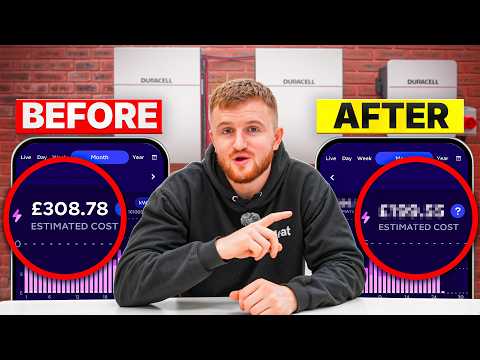
Exactly this route, lived and measured (made by a company that sells this kit, so watch it with that in mind).

The tariff half of the equation, current (made by a company that sells this kit, so watch it with that in mind).
Would a battery earn its keep at your place? Three minutes, honest answer.
Check my options →